ADVANCED MATERIALS. REAL-WORLD PURPOSE.

Concrete.
With a different
kind of strength.

Materials that bend, control cracking and help infrastructure go further. ZONIX connects cementitious materials research with the demands of the built world.

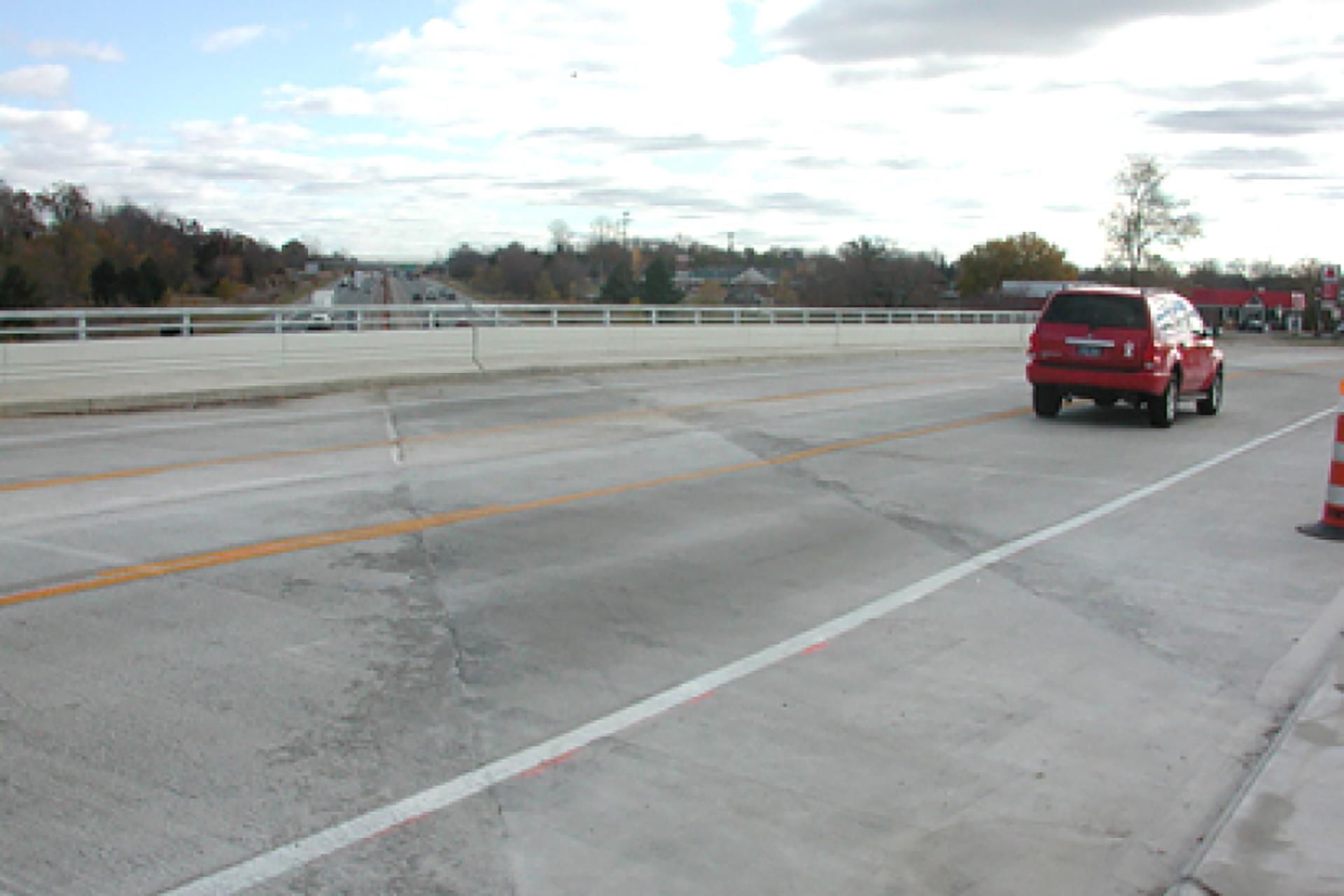
Michigan bridge deck with a ductile concrete link slab
01 / MICHIGAN BRIDGE LINK SLABBuilt for the load.
Designed for the long run.
MATERIAL SCIENCE → EVERYDAY INFRASTRUCTURE
THE ZONIX APPROACH

Translate. Scale. Qualify. Manufacture.

↓
01 / THE MATERIAL DIFFERENCEHigh Ductility Cementitious Composite

Strength is more
than being rigid.

Conventional concrete can concentrate damage in a large crack. High Ductility Cementitious Composite is engineered to distribute tensile strain through multiple fine cracks.

Polymer microfibres bridge those cracks, allowing a ductile response under load. That opens up new possibilities for pavement design, repair overlays and precast elements.

A DIFFERENT RESPONSE TO LOAD

See how damage
can be distributed.

Fibres bridge multiple fine cracks, helping distribute strain across the material.

Conceptual illustration of material behaviour. Not a structural simulation.
APPLIED LOAD ↓
HIGH DUCTILITY / DISTRIBUTED MICROCRACKINGILLUSTRATIVE
02 / APPLICATIONSOne material platform. Multiple possibilities.

Better materials.
Where they matter.

Focus on the places where repeated loading, repair access and operational downtime make durability especially valuable.

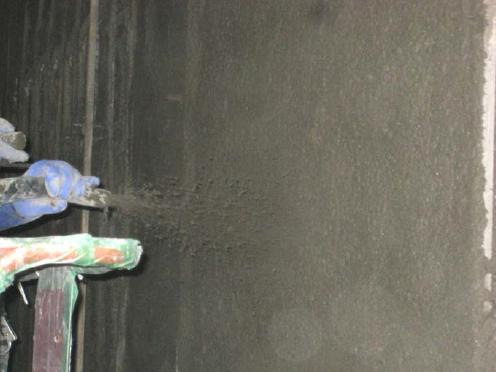
Spray application example from the supplied draft method statement
02 / REPAIR & REHABILITATION

Strengthening

E100 cementitious overlays for engineered strengthening and repair of existing walls and concrete surfaces, supported by substrate preparation, anchorage and bond testing.

Discuss a strengthening project ↗
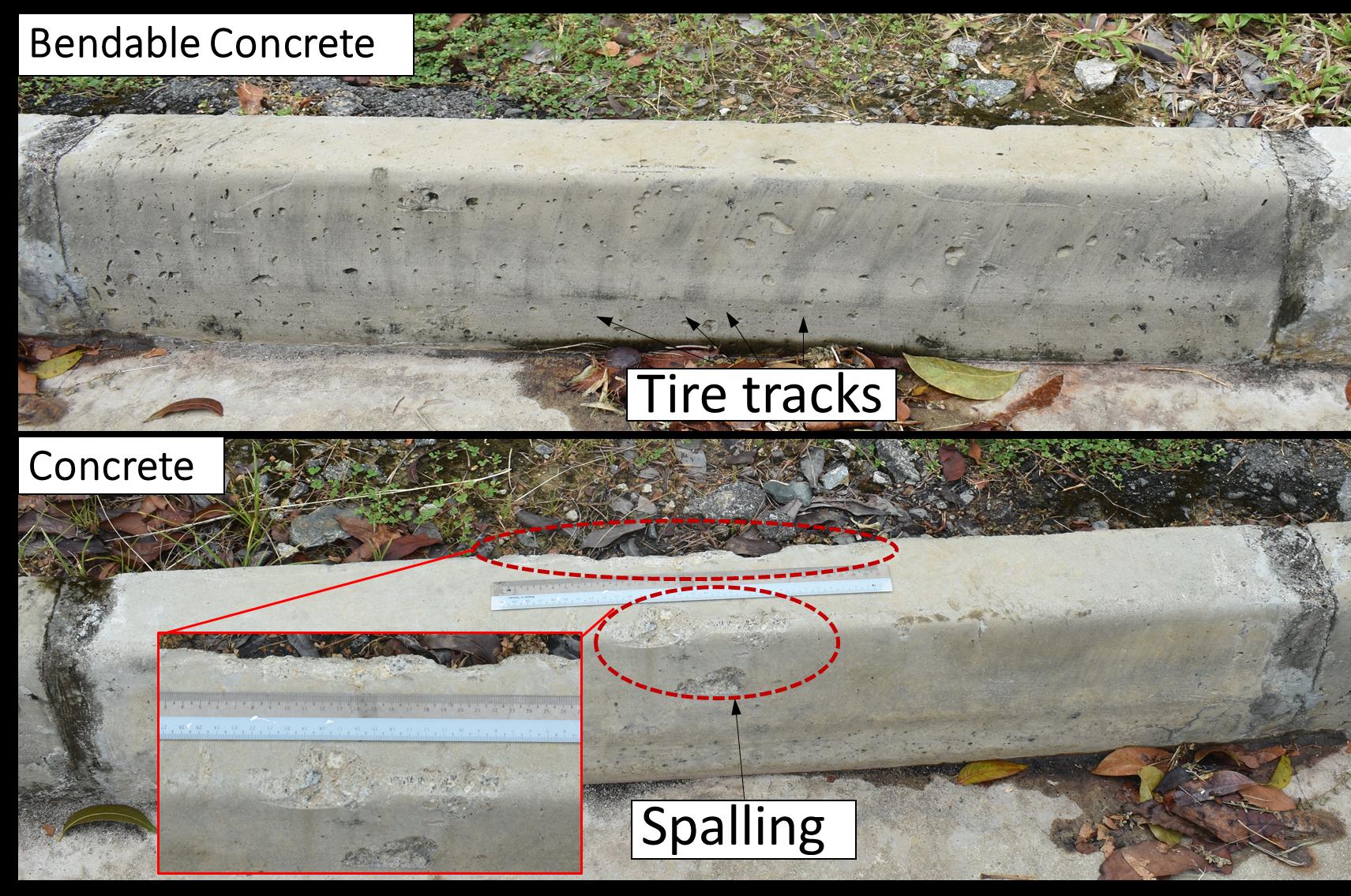
Comparison of ductile and conventional concrete kerb damage in supplied research material
03 / FACTORY-CAST ELEMENTS

Precast

Application development for kerbs, tactile tiles, drainage covers and other precast elements, matching damage tolerance, geometry and finish to the intended use.

Explore a precast application ↗
Concrete pavement application
04 / PAVEMENT SYSTEMS

ConFlexPave

Pavement applications using High Ductility Cementitious Composite for heavy-vehicle lanes, turning bays, aprons and logistics areas where repeated loading and maintenance downtime matter.

Explore a pavement project ↗
ENGINEERED OVERLAYCONCEPTUAL APPLICATION
05 / EXPLORATORY SCOPE

Blast Protection

Assess ductile overlays for blast-related wall strengthening. This scope is under technical development; performance depends on the complete wall, anchorage and loading design.

Discuss a technical assessment ↗

Images are drawn from the supplied technical materials and illustrate application types. They do not identify completed ZONIX projects. Design and suitability require project-specific assessment.

03 / DESIGN FOR THE WHOLE LIFEBeyond the cost per cubic metre.

Less intervention.
More possibility.

The value of ductile concrete depends on the complete system: material volume, reinforcement, maintenance and the cost of closing an asset.

01

Use material
more efficiently.

Selected High Ductility Cementitious Composite pavement research and proposals explore thinner sections and reduced conventional reinforcement. Each design needs its own verification.

02

Control damage
under repeated loads.

Ductility and fine crack distribution can improve damage tolerance. Actual fatigue performance depends on mix, geometry and loading.

03

Consider the cost
of every closure.

Evaluate installation alongside repair frequency, replacement scope and disruption. A higher material price may still support a stronger whole-life case.

04 / THE TRANSLATION PLATFORMFrom a research recipe to repeatable supply.

Innovation needs
a way into the world.

ZONIX brings material development, production engineering and application know-how into one pathway.

Current supply is centred on controlled prepackaged E100. The roadmap moves toward dedicated production as deployment demand grows.

01 / TRANSLATE

Adapt the formulation.

Match raw materials, fibre dosing and mix design to the application.

02 / SCALE

Engineer the process.

Develop mixing sequences, workability controls and repeatable production methods.

03 / QUALIFY

Verify what matters.

Define tests for material performance, construction quality and site acceptance.

04 / MANUFACTURE

Deliver with control.

Connect batch traceability, QA records, technical documentation and field support.

05 / ENGINEERING, GROUNDED IN EVIDENCE

From material science
to site requirements.

Our approach draws on High Ductility Cementitious Composite research and practical application knowledge. The next step is always to establish what a particular asset needs.

Where has High Ductility Cementitious Composite been applied?

Applications across the field of ductile cementitious materials include bridge link slabs, dam and irrigation-channel repairs, tunnel linings, retaining walls and building coupling beams.

Can High Ductility Cementitious Composite reduce reinforcement or pavement thickness?

Selected studies and the supplied development proposals explore those possibilities. Reductions depend on loading, geometry, serviceability, reinforcement detailing and engineering verification. They are not universal product allowances.

What does a repair scheme need?

A substrate survey, a defined design basis, preparation and anchorage details, an approved application method, curing controls and acceptance testing. The supplied blast-related overlay documents are drafts for technical review, not construction approvals.

LET’S BUILD THE NEXT APPLICATION

What does your
infrastructure
need to do better?

Start with the challenge. We’ll shape the material conversation around the asset.